
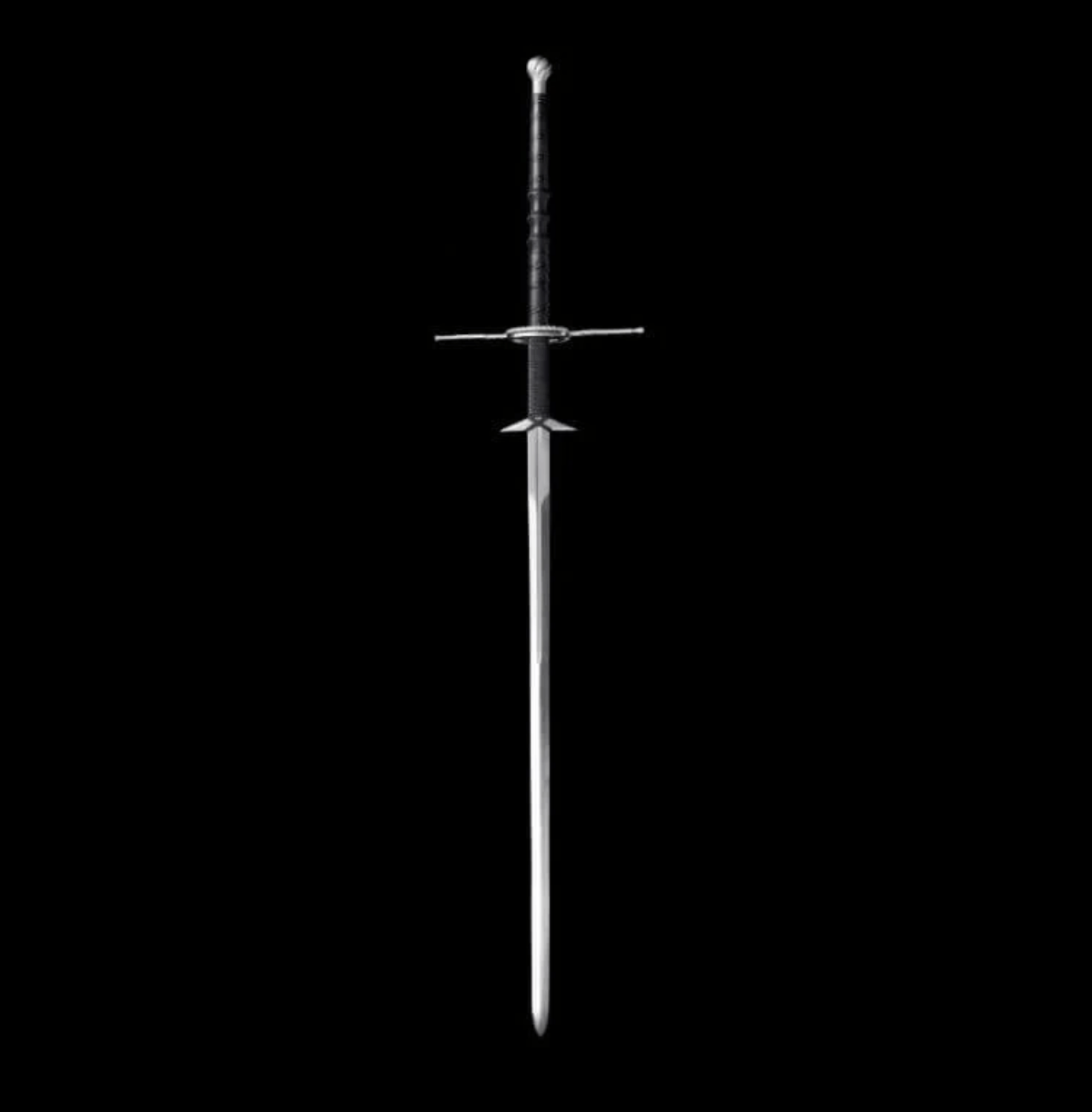
The Zweihänder is the giant two-handed sword carried by German Landsknecht mercenaries through the 1500s. The name means “two-hander.” A fighting example ran about 150 to 180 cm long, roughly 5 to 6 feet, and weighed 2 to 3.5 kg, around 4.5 to 8 pounds, which makes it far lighter than its size suggests. Only a small, well-paid part of a Landsknecht company ever carried one. This guide covers what the sword was, who used it, what it actually did on the battlefield, how it was built, and how modern replicas measure up.
Key Facts
- What it is: a large two-handed great sword used by German Landsknecht mercenaries in the 16th century.
- Size: about 150 to 180 cm long and 2 to 3.5 kg for a fighting sword. The two-metre examples in museums are ceremonial bearing swords, not battle weapons.
- Who carried it: the Doppelsöldner, or “double-pay men,” a small elite paid extra for the most dangerous work.
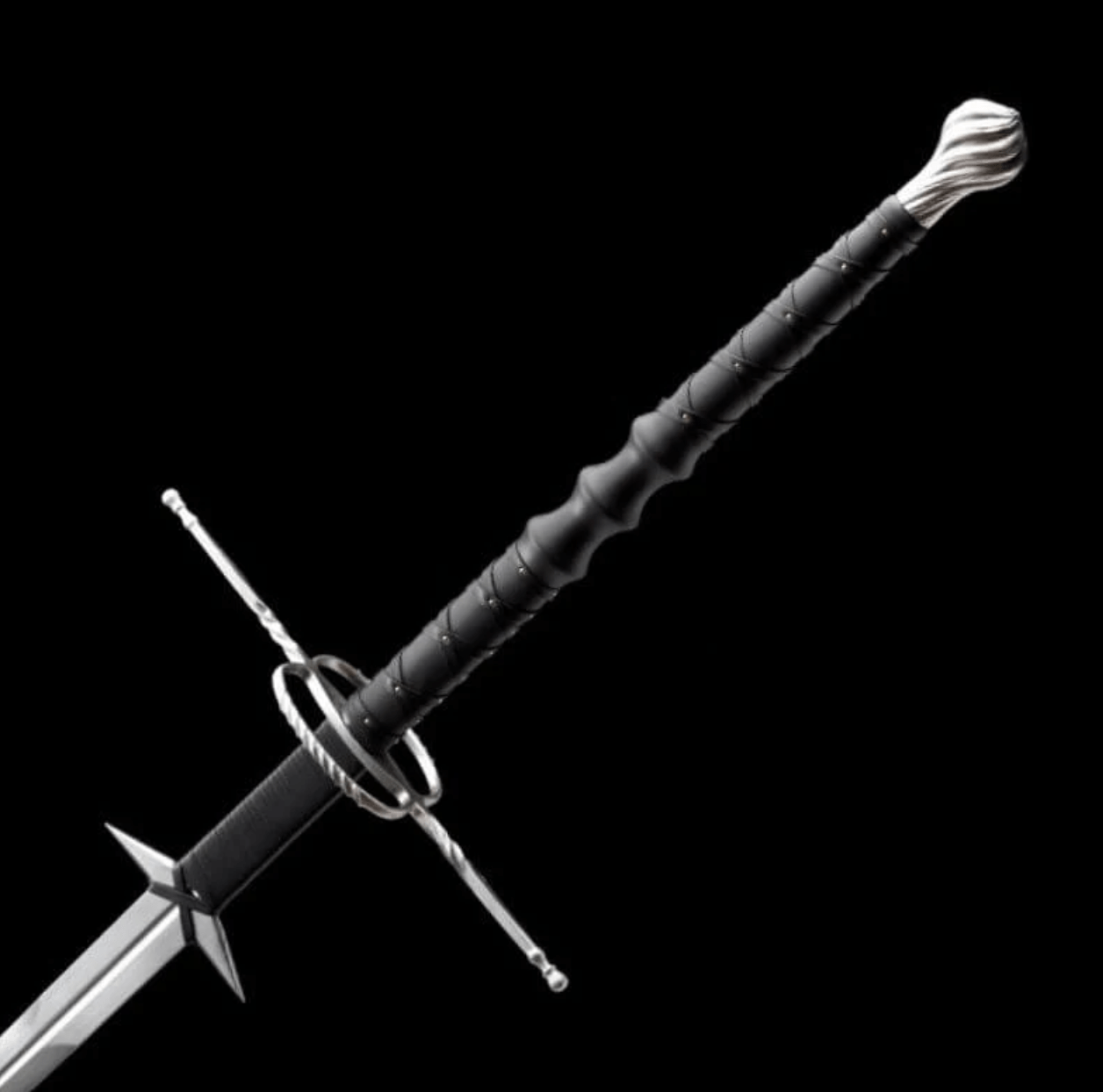
- Signature feature: the Parierhaken, a pair of parrying hooks set above an unsharpened, leather-wrapped ricasso that let a hand grip the blade short.
- Honest note on tactics: the pike-breaking story is real in outline but debated in scale. The sword also guarded banners, served bodyguards, and ended its career as a parade weapon.
What the Zweihänder Was
The Zweihänder grew out of the ordinary German longsword and reached its full size in the 16th century. By then it handled less like a sword and more like a polearm, swung and shifted with both hands well out along the grip. Most had a broad, double-edged straight blade, though some carried a flammard, the wavy or flame-shaped edge that looks dramatic and does little that a straight blade does not.
Get the numbers right and the myths fall away. A battlefield Zweihänder measured roughly 150 to 180 cm overall, with a blade around 110 to 140 cm, and weighed 2 to 3.5 kg. Museum giants skew the picture. The sword tied to the Frisian folk hero Grutte Pier at the Fries Museum runs 213 cm and about 6.6 kg, but that class of sword was a bearing sword for ceremony and status, carried in processions rather than swung in a melee.
The Landsknechts and the Doppelsöldner
 Illustration by Angus McBride
Emperor Maximilian I raised the Landsknechts late in the 15th century to give the Holy Roman Empire an infantry that could stand against the Swiss pike squares then dominating open-field war. Georg von Frundsberg organised and drilled them and earned the title “Father of the Landsknechts.”
The Zweihänder belonged to the Doppelsöldner, the “double-pay men.” These soldiers took extra wages for the most exposed roles, whether that meant the front rank with a two-handed sword or an arquebus in the opening volley. They were always a minority. The Black Band, active in the 1510s and 1520s, fielded about 2,000 two-handed swordsmen in a force of roughly 17,000, so for every Zweihänder in a company there were far more pikes.
What It Was Actually Used For
The famous image has a Doppelsöldner striding ahead of the formation and swinging his Zweihänder to knock aside or hack through the front of a pike square, opening a gap for his comrades. Period sources agree that these swordsmen fought with and against pike formations. How far the rest of the story holds is another matter.
Historians dispute how much path-clearing really happened and how well it worked. A single man hewing a corridor through a hedge of levelled pikes is a striking picture and a hard one to verify, and modern scholarship treats it with caution. What the reach did reliably was let a trained swordsman threaten the shafts and the men behind the first rank, and force pikemen to react to a weapon they could not easily counter at close range.
The sword had steadier work too. Doppelsöldner guarded the standard and the officers clustered around it, served as bodyguards, and cleared space once a fight closed to sword range. Then firearms took over. As massed shot came to decide battles late in the 16th century, the fighting Zweihänder faded, and it survived mainly as a parade weapon and a mark of rank carried by ceremonial guards.
Design and Build
The size gets the attention, but the handling comes from the details.
Blade and ricasso
Above the guard sits the ricasso, an unsharpened section of blade, usually wrapped in leather or cord. A fighter could grip there to shorten the sword and control it like a short spear in a press. You can see the same feature named on any diagram of sword anatomy.
Parrying hooks (Parierhaken)
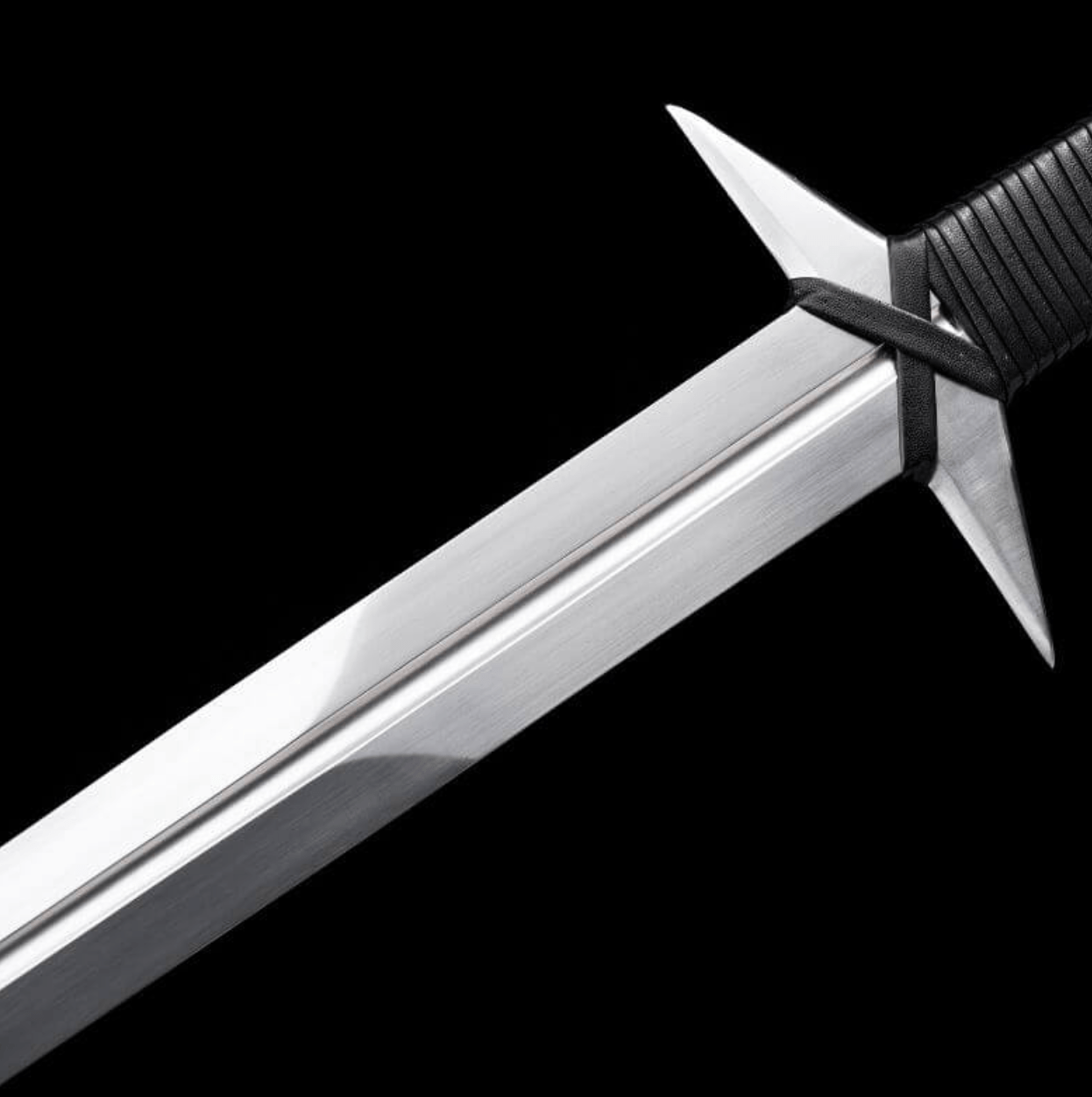
A pair of lugs juts from the blade at the top of the ricasso. They catch or bind an opposing weapon and shield the forward hand when the wielder grips above them. No other European sword makes this feature so central.
Guard and pommel
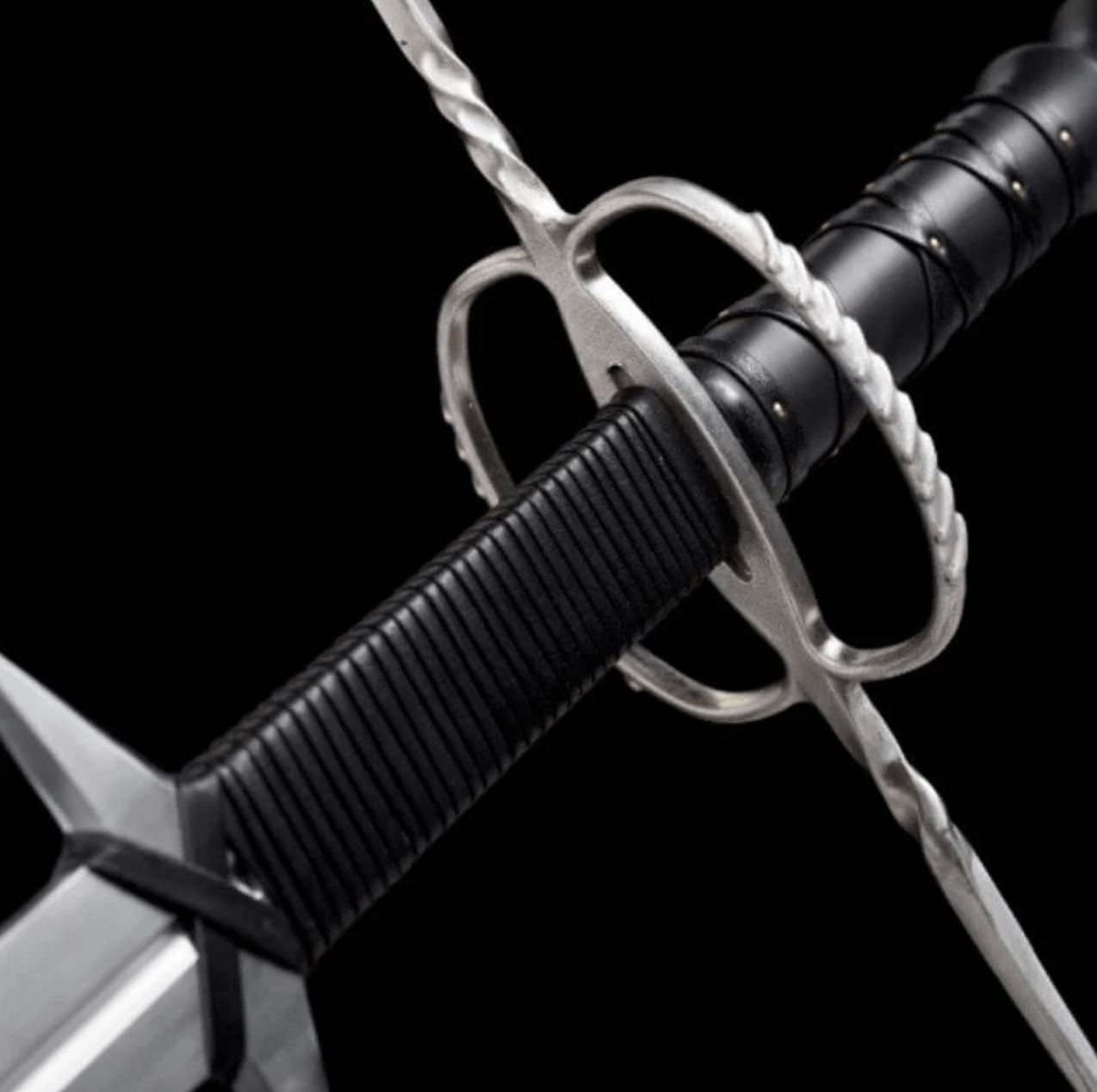
A long crossguard, often fitted with side rings, gave broad protection. A heavy pommel supplied the counterweight, and it explains why a 3 kg sword handles better than the mass implies. With weight set at both ends and the point of balance sitting close to the hands, the blade turns and recovers far faster than its length would suggest. In trained hands it was quick, not clumsy.
How It Was Fought
The German school of the Liechtenauer tradition supplied the underlying method: the timing concepts of Vor, Nach and Indes (before, after, and in the moment), the guards, and the play of the bind. Dedicated instruction for the two-handed sword survives above all in the mid-16th-century compendium of Paulus Hector Mair, which treats the weapon directly among its many forms. Joachim Meyer’s 1570 book centres on the longsword and other arms and gives the Zweihänder no chapter of its own, though its principles carry across.
Two other traditions round out the picture. The Iberian montante rules and the Italian spadone material describe how a lone fighter used a very long two-hander against several opponents, which is much of what the Zweihänder was for. Across all of them the techniques are consistent: high guards feeding wide cuts driven from the hips and shoulders, the ricasso grip for thrusts and close work, and the hooks and the strong part of the blade used to control an enemy’s weapon.
People Behind the Legend
Georg von Frundsberg

The organiser and trainer of the Landsknechts under Maximilian I. He commanded from the rear but valued the double-pay men and the controlled aggression they brought to a charge.
Kaspar von Frundsberg

Georg’s son, who led Landsknecht troops in later campaigns and carried the family’s military reputation forward. His career shows how much of the Landsknecht system rested on drill and organisation rather than on any single weapon.
Grutte Pier (Pier Gerlofs Donia)
A Frisian folk hero remembered for superhuman feats with a Zweihänder. The 213 cm, 6.6 kg sword displayed under his name at the Fries Museum dates to the right period and saw real use, but no record actually ties it to him. It is a clean example of legend outgrowing the evidence.
Götz von Berlichingen

An imperial knight who lost a hand in war and fought on with an iron prosthetic, later famous for his memoirs. Popular retellings link him to giant swords, but that connection is folklore rather than documented fact.
Cultural Legacy

Landsknechts dressed to be seen, in slashed and puffed clothing, bright colours, feathers and ribbons, and the Zweihänder finished the look. Albrecht Dürer engraved a group of them around 1495, a print now held by the Art Institute of Chicago as Five Landsknechte and an Oriental Man on Horseback, and the subject spread quickly through Renaissance prints. Modern fantasy and video games inherited the oversized two-hander from this line. Those blades are exaggerated well past anything a person could swing, but the ancestry traces straight back to the real sword.
Modern Replicas: What to Look For
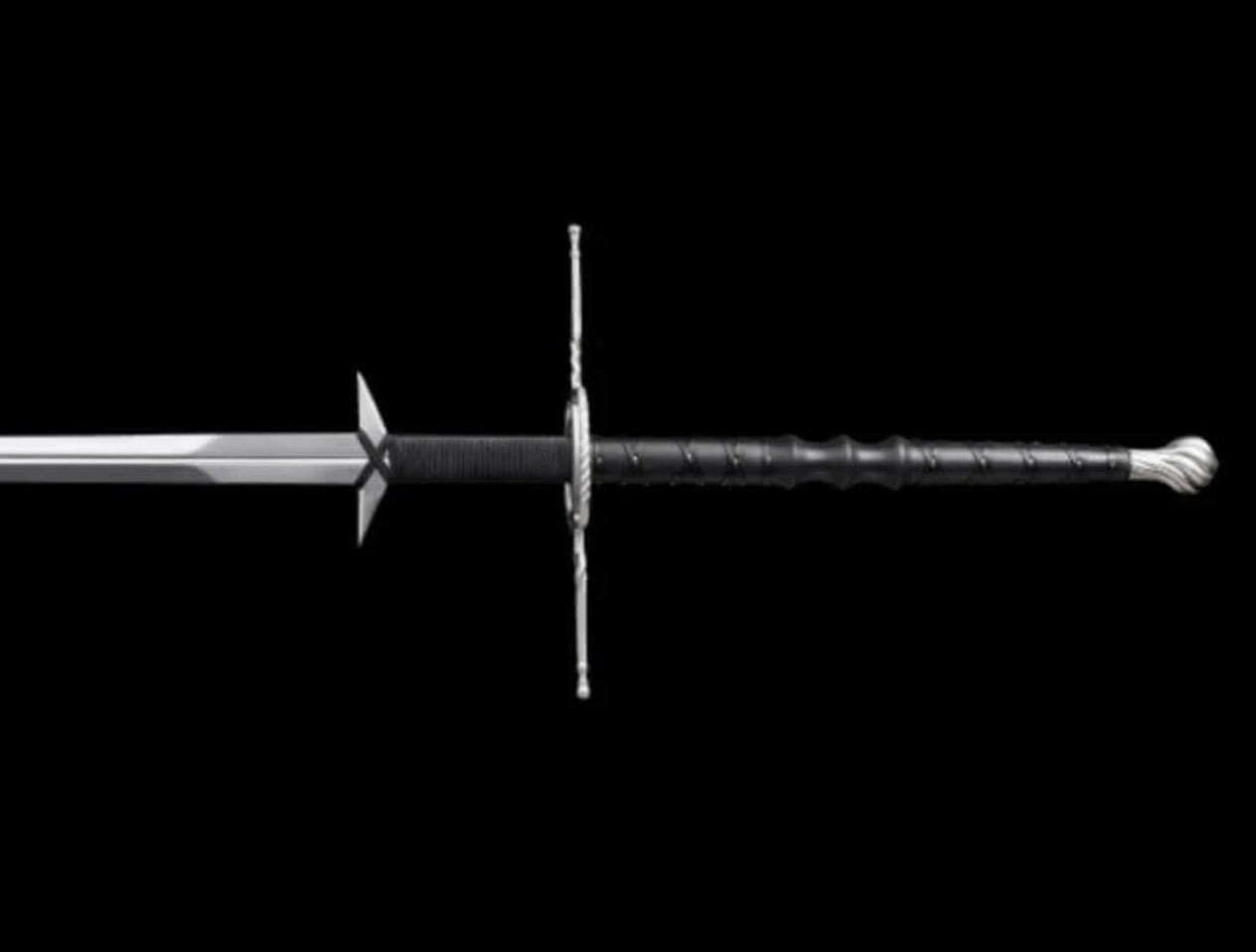
A good Zweihänder replica follows the same logic the originals did. Judge it the way you would judge any functional blade, on steel, build, and honest use, the way the Blade Truth Standard lays out.
- Steel: spring steels such as 5160 or 6150 handle the length and the flex a blade this size needs.
- Weight and balance: aim for 2 to 3.5 kg with the balance point close to the guard. If it swings like a crowbar, the distal taper or the pommel is wrong.
- Edge: display pieces can be sharp; HEMA and reenactment use blunt, rebated edges.
- Fittings: proper parrying hooks, side rings, and a solid pommel peen matter for both the look and the safety of a sword this heavy.
Our Zweihänder Great Sword is built to those lines, with period-correct hooks and ring guard and a balance meant to move rather than just hang on a wall.
Caring for a Zweihänder
Wipe the blade down after handling to clear fingerprints and moisture, then lay on a thin coat of sword oil or a silicone protectant, more often in a humid climate. Store it dry and out of direct sun. Check the guard and pommel now and then for any movement and tighten the assembly if it shifts, since a sword this long puts real leverage on loose fittings.
FAQ
How heavy was a real Zweihänder? A fighting sword weighed about 2 to 3.5 kg, roughly 4.5 to 8 pounds. The far heavier examples in museums, some near 6.6 kg, are ceremonial bearing swords that were never meant for combat.
Did Zweihänders really cut through pike formations? They fought around pike squares, and their reach let them threaten the shafts and the ranks behind the first line. The stronger claim, that one swordsman could hew a path through a wall of pikes, is debated and hard to document. The reach, the disruption, and the guarding roles are the parts the sources support.
What are the hooks on the blade for? The Parierhaken catch or bind an enemy weapon and protect the forward hand when a fighter grips the unsharpened ricasso above them to shorten the sword.
Is a Zweihänder just a big longsword? No. It is larger and heavier and handles more like a polearm. The differences are set out in great sword vs longsword.
Can you actually train with one? Yes. HEMA practitioners spar with blunt versions, and the surviving material from Mair, together with the montante and spadone traditions, gives a real technical basis for how these swords were used.
The Short Version
The Zweihänder earns its fame from sheer size, but the reason it worked was ordinary good engineering. Taper, balance, and a heavy pommel tamed a very long blade, and a small number of well-paid specialists put it to use for one loud century of European warfare. Strip away the fantasy and you are left with a specialist tool for a specific job, which is exactly what makes it worth understanding.